
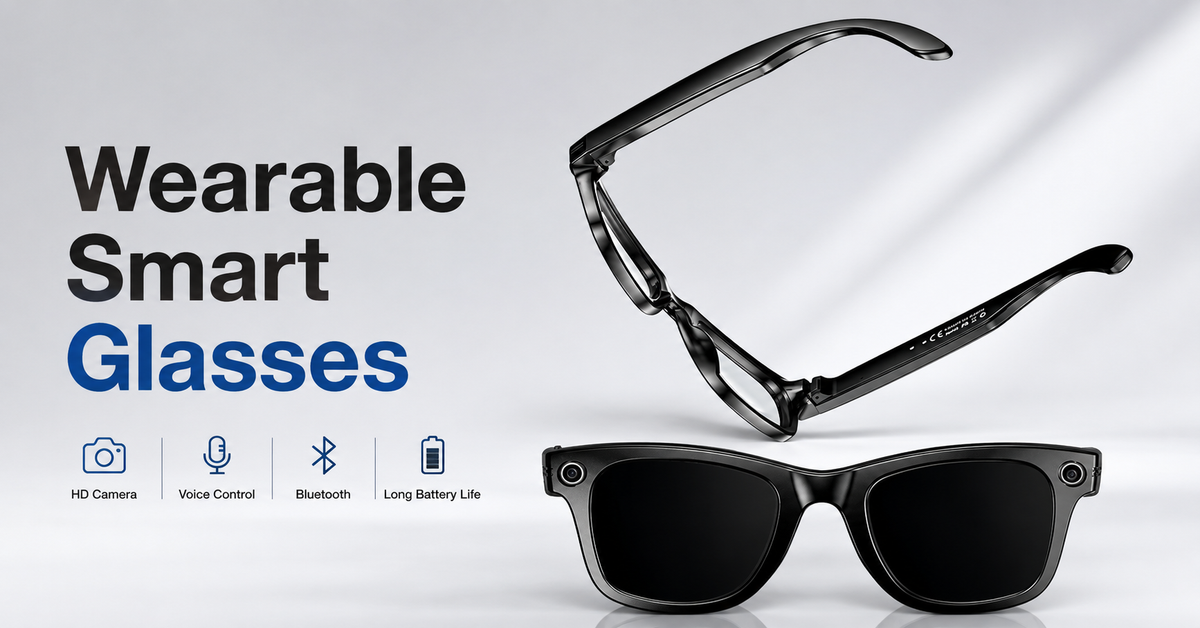
At first glance, they might look almost identical — same frame shape, same lenses, same everyday design. But the moment you look closer, the differences between wearable smart glasses and regular glasses become obvious. One is purely about vision correction or sun protection, while the other blends that same everyday function with built-in technology that connects to your digital life.
If you're trying to decide whether it's worth upgrading from a standard pair to the best wearable smart glasses, this guide breaks down exactly how they differ, where each one shines, and which option makes more sense for your lifestyle.
What Are Regular Glasses?
Regular glasses serve one core purpose: helping you see better or protecting your eyes from sunlight and UV rays. They consist of a frame and lenses, with no electronic components, no connectivity, and no additional features beyond optical correction or tinting. They're simple, reliable, and have been the standard for over a century.
What Are Wearable Smart Glasses?
Wearable Smart Glasses take that same familiar form factor and embed it with miniature technology—cameras, speakers, microphones, sensors, and sometimes even small displays. This allows the wearer to take calls, listen to music, capture photos and videos, or access voice assistants, all without touching a phone.
In short, the best wearable smart glasses do everything regular glasses do but add a layer of digital connectivity that makes everyday tasks noticeably more convenient.
Key Differences Between Wearable Smart Glasses and Regular Glasses
1. Functionality
Regular glasses are purely optical — their only job is vision correction or sun protection. Wearable Smart Glasses, on the other hand, combine that same optical function with smart features like hands-free calling, audio playback, and photo or video capture, making them far more versatile for daily use.
2. Connectivity
Regular glasses have no connectivity features at all. Smart glasses bought online typically pair with your smartphone via Bluetooth, syncing notifications, calls, and media so you can interact with your phone without physically holding it.
3. Battery and Charging
Since regular glasses have no electronic components, they never need charging. Wearable Smart Glasses include a rechargeable battery, usually lasting several hours per charge, with many models offering a charging case for extended use throughout the day.
4. Weight and Design Considerations
Regular glasses are generally lighter since they contain no internal tech. Smart glasses bought online are slightly heavier due to built-in components like speakers and cameras, though modern designs have gotten impressively close to the weight and comfort of standard eyewear.
5. Price Point
Regular glasses can range from very affordable to premium, depending on the brand and lens type. Latest smart glasses generally sit at a higher price point due to the embedded technology, though the added functionality often justifies the investment for frequent users.
6. Maintenance
Regular glasses require basic care — cleaning lenses and occasional frame adjustments. Premium smart eyewear needs a bit more attention, including regular charging, occasional software or firmware updates, and careful handling to protect the internal electronics.
Where Wearable Smart Glasses Clearly Win
There are several everyday situations where the best AI smart glasses offer a meaningful advantage over regular glasses:
-
Hands-free communication: Taking calls or listening to music without needing earbuds or holding your phone.
-
On-the-go content capture: Snapping photos or recording short videos from a natural, first-person perspective, without pulling out a camera or phone.
-
Reduced phone dependency: Checking notifications and interacting with basic phone functions without unlocking your screen.
-
Multi-tasking convenience: Staying connected during workouts, commutes, or errands without extra accessories.
For anyone who values convenience and hands-free functionality, AI-powered eyewear offers a genuine upgrade over the purely passive nature of regular glasses.
Where Regular Glasses Still Make Sense
Despite the appeal of smart technology, regular glasses remain the better choice in certain situations:
-
Simplicity: No charging, no syncing, no software — just put them on and go.
-
Lower cost: Especially for basic prescription needs, regular glasses are typically far more budget-friendly.
-
Longer lifespan: Without batteries or electronic components, regular glasses generally last longer without needing replacement or repair.
-
Minimal maintenance: No firmware updates or charging routines to worry about.
If your primary need is simply clear vision or sun protection without any interest in added tech features, regular glasses remain a perfectly practical choice.
Comfort and Everyday Wearability
One common concern with voice-enabled glasses is whether the added technology compromises comfort. Fortunately, most modern models are designed to closely match the weight and fit of regular glasses, using lightweight materials and balanced frame construction. While there may be a slightly noticeable difference at first, many users report barely feeling the extra weight after a short adjustment period.
Regular glasses, by comparison, have the natural advantage of being purely lightweight since there's no internal hardware to account for, but the gap has narrowed significantly as smart eyewear technology has improved.
Style and Everyday Appearance
A major misconception is that wearable smart glasses look noticeably different from regular glasses. In reality, most modern smart glasses are designed to closely resemble standard eyewear or sunglasses, with the technology discreetly built into the frame arms. Unless someone looks closely, it's often difficult to tell the difference at a glance—making them a practical option for anyone who doesn't want their eyewear to look overtly "techy."
Which One Should You Choose?
Here's a simple way to decide between the two:
-
Choose regular glasses if you want a simple, affordable, low-maintenance option purely for vision correction or sun protection.
-
Choose wearable smart glasses if you want the same everyday function as regular glasses, plus hands-free calls, music, notifications, and content capture built directly into your eyewear.
For most people balancing work, travel, and daily life, wearable smart glasses offer a practical way to reduce phone dependency while still getting the everyday function of standard eyewear.
Why Choose TechAuraOnline for Your Wearable Smart Glasses
If you've decided that wearable smart glasses fit your lifestyle better than a standard pair, TechAuraOnline offers a curated selection of smart eyewear built for comfort, reliable connectivity, and everyday performance. Instead of sorting through countless generic listings, TechAuraOnline provides clear, honest product details so you can shop with confidence, no matter where in the world you're ordering from.
Final Thoughts
Regular glasses and digital lifestyle gadgets both serve the core purpose of everyday eyewear, but the similarities largely end there. While regular glasses offer simplicity and affordability, wearable smart glasses bring genuine convenience by blending vision correction with hands-free connectivity—a combination that's becoming increasingly relevant for modern, on-the-go lifestyles.
If you're ready to experience the next step in everyday eyewear, explore the range available at TechAuraOnline and find a pair of smart wearable devices that fits seamlessly into your daily routine.
Frequently Asked Questions
1. Are Wearable Smart Glasses heavier than regular glasses?
They're generally a bit heavier due to built-in components like speakers and cameras, though modern designs have made this difference minimal for most users.
2. Can Wearable Smart Glasses be used with a prescription?
Many brands now offer prescription lens options or removable inserts, allowing users to combine vision correction with smart features.
3. Do Wearable Smart Glasses look different from regular glasses?
Not significantly. Most models are designed to closely resemble standard eyewear, with technology built discreetly into the frame arms.
4. Is it worth switching from regular glasses to Wearable Smart Glasses?
If you value hands-free calling, music, and content capture, the switch can genuinely simplify daily tasks. If you only need vision correction, regular glasses may still be the simpler choice.
5. Where can I buy reliable wearable smart glasses online?
TechAuraOnline offers a trusted range of wearable smart glasses, tested for comfort, connectivity, and everyday durability, making it a solid starting point for anyone shopping online.