
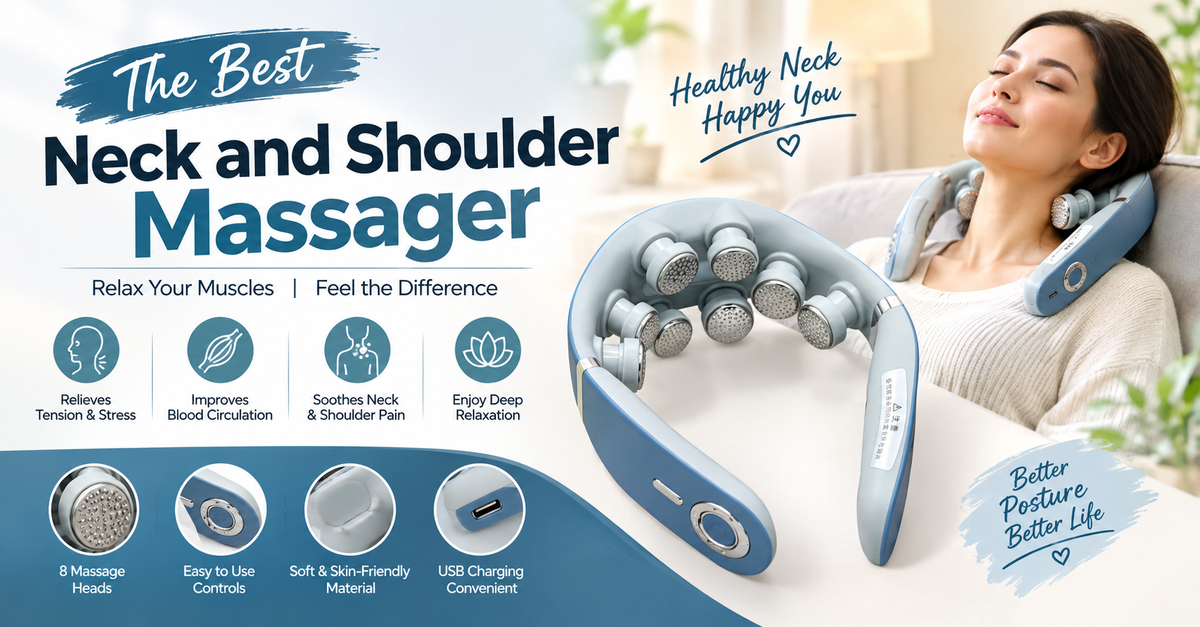
Long working hours, constant screen time, and poor posture have made neck and shoulder pain one of the most common complaints today. Whether you're working from a desk, scrolling on your phone, or dealing with stress-related tension, your neck and shoulders often bear the brunt of it. That's exactly why The Best Neck and Shoulder Massager has become such an essential product for people looking for quick, effective relief at home.
But with so many brands, designs, and features flooding the market in 2026, choosing the right one can feel overwhelming. This complete buying guide walks you through everything you need to know before purchasing, so you invest in a massager that actually solves your problem instead of gathering dust in a drawer.
Why You Need a Neck and Shoulder Massager
Before diving into features, it's worth understanding why this device has become so popular:
-
Reduces muscle tension caused by long hours of sitting or poor posture
-
Improves blood circulation around the neck, shoulders, and upper back
-
Relieves stress and headaches often linked to tight neck muscles
-
Saves money on frequent spa or physiotherapy visits
-
Convenient — usable at home, in the office, or even in the car
If you regularly deal with stiffness, tension headaches, or shoulder knots, The Best Neck and Shoulder Massager can become a genuinely useful part of your daily routine rather than just another gadget.
Types of Neck and Shoulder Massagers
Not all massagers work the same way. Understanding the different types will help you pick the one that fits your needs.
1. Shiatsu Kneading Massagers
These use rotating nodes to mimic the deep kneading technique used by professional massage therapists. They're excellent for deep tissue relief and knots.
2. Percussion Massagers
These deliver rapid, repetitive strikes to loosen tight muscles quickly. Great for post-workout recovery or acute stiffness.
3. Heated Massagers
Combine vibration or kneading with heat therapy, which helps relax muscles faster and improves blood flow.
4. Electric Pulse (TENS) Massagers
Use low-frequency electrical pulses to stimulate muscles and nerves. Popular for chronic pain relief, though not suitable for everyone (people with pacemakers should avoid these).
5. Wearable Wrap-Style Massagers
Designed to sit comfortably around the neck and shoulders, offering hands-free operation — ideal for use while working or relaxing.
Key Features to Look for in The Best Neck and Shoulder Massager
Choosing the right massager comes down to matching features with your specific needs. Here's what to prioritize:
1. Massage Technique
Decide whether you need deep kneading (Shiatsu), quick percussion, or gentle vibration based on your pain level and preference.
2. Heat Function
A built-in heat setting significantly improves muscle relaxation and is especially helpful for chronic tension or cold weather use.
3. Intensity Levels
Look for adjustable intensity settings so you can customize the pressure from light relaxation to deep tissue relief.
4. Coverage Area
Some massagers only target the neck, while others extend to the shoulders and upper back. Choose based on where you experience the most discomfort.
5. Portability and Design
If you plan to use it at the office, in the car, or while traveling, go for a lightweight, cordless, wrap-around design.
6. Battery Life (for Cordless Models)
Check how long the massager runs on a full charge, especially if you plan to use it daily for extended sessions.
7. Noise Level
Percussion massagers can be loud. If you plan to use it in shared spaces or during calls, look for models advertised as "quiet operation."
8. Safety Features
Look for auto shut-off timers (usually 15-20 minutes) to prevent overuse, along with overheat protection for heated models.
9. Ease of Use
Simple button controls, remote access, or app connectivity can make a big difference in daily usability.
10. Price and Warranty
Compare pricing against features offered, and always check the warranty period — a good massager should come with at least 6-12 months of coverage.
How to Choose Based on Your Needs
Not sure which type suits you best? Here's a quick breakdown:
-
Desk workers with constant stiffness → Shiatsu kneading massager with heat
-
Athletes or gym-goers → Percussion massager for fast muscle recovery
-
People with chronic pain → TENS electric pulse massager (consult a doctor first)
-
Frequent travelers → Lightweight wrap-style cordless massager
-
Budget-conscious buyers → Basic vibration massager with heat function
Benefits of Using a Neck and Shoulder Massager Regularly
Using The Best Neck and Shoulder Massager consistently can offer noticeable long-term benefits:
-
Better posture awareness as tension reduces
-
Improved sleep quality due to reduced muscle tightness
-
Lower stress levels from regular relaxation sessions
-
Reduced dependency on painkillers for minor muscle aches
-
More productivity at work due to fewer distracting aches
Common Mistakes to Avoid When Buying a Massager
-
Ignoring the auto shut-off feature — Overuse can sometimes cause soreness instead of relief
-
Choosing based on price alone — Cheaper models often skip important safety features
-
Not checking noise levels — Some percussion devices are surprisingly loud
-
Skipping the warranty check — Always confirm after-sales support before buying
-
Ignoring your specific pain type — A massager great for athletes may not suit someone with chronic neck pain
Safety Tips Before Using a Neck and Shoulder Massager
-
Start with the lowest intensity setting and gradually increase
-
Avoid using it for more than 15-20 minutes per session
-
Do not use heated or electric pulse massagers if you have a pacemaker or are pregnant, unless approved by a doctor
-
Stop immediately if you feel sharp pain, numbness, or discomfort
-
Clean and maintain the device as per manufacturer instructions
Conclusion
Neck and shoulder pain doesn't have to be a permanent part of your daily routine. With the right device, you can relieve tension, improve circulation, and relax at the end of a long day — all from the comfort of your home. When choosing The Best Neck and Shoulder Massager in 2026, focus on the massage technique, heat function, intensity control, portability, and safety features that match your specific needs.
A well-chosen massager isn't just a gadget — it's a genuine investment in your everyday comfort and wellbeing. Take your time comparing a few models, read real user reviews, and pick one that fits both your lifestyle and your budget. At TechAuraOnline, you can explore a range of smart wellness and massage products designed to make everyday comfort more convenient.
FAQs
Q1. What is The Best Neck and Shoulder Massager for office use?
A lightweight, wrap-around cordless massager with adjustable intensity and heat function works best for office use since it's quiet, portable, and easy to use discreetly at your desk.
Q2. Are electric neck and shoulder massagers safe to use daily?
Yes, most are safe for daily use if sessions are kept to 15-20 minutes with breaks in between. Always follow the manufacturer's safety guidelines.
Q3. Can a neck and shoulder massager help with headaches?
Yes, many users find relief from tension headaches since these massagers relax tight neck muscles that often contribute to headache pain.
Q4. Is heat function necessary in a neck and shoulder massager?
While not mandatory, heat therapy significantly improves muscle relaxation and blood circulation, making it a highly recommended feature.
Q5. How do I choose between a Shiatsu and percussion massager?
Choose Shiatsu for deep, slow kneading relief on chronic tension, and percussion for fast, high-intensity relief after workouts or acute stiffness.
Q6. Are cordless neck and shoulder massagers better than corded ones?
Cordless models offer more flexibility and portability, making them ideal for travel or multitasking, while corded models often provide more consistent power for longer sessions.
Q7. What safety features should I look for before buying?
Look for auto shut-off timers, overheat protection, and adjustable intensity settings to ensure safe and comfortable use every time.