
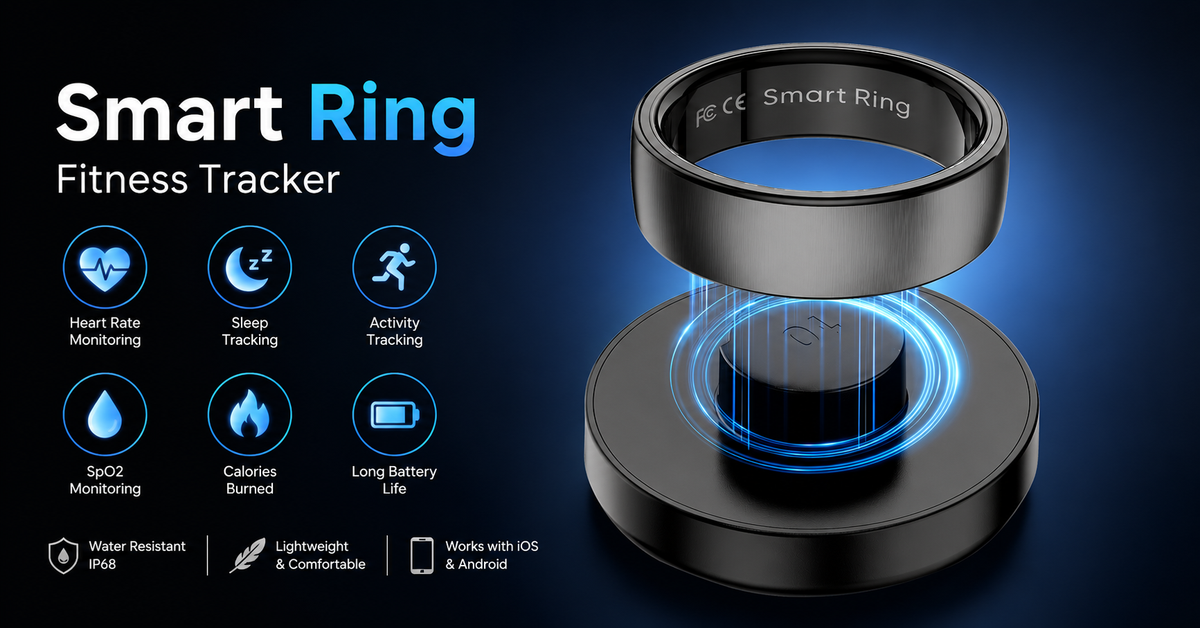
Choosing the right wearable technology for your health goals can feel overwhelming with so many options flooding the market. Two of the most popular choices today are the Smart Ring Fitness Tracker and the traditional smartwatch. Both promise to help you monitor your wellness journey, but they take very different approaches to doing it. If you're stuck deciding between these two devices, this guide breaks down everything you need to know before making a purchase.
What Is a Smart Ring Fitness Tracker?
This type of wearable is a compact device worn on your finger instead of your wrist. Despite its small size, it packs in sensors capable of tracking:
-
Heart rate and heart rate variability
-
Sleep patterns and sleep stages
-
Body temperature fluctuations
-
Blood oxygen (SpO₂) levels
-
Daily steps and overall activity
Brands like Oura, Ultrahuman, and Samsung's Galaxy Ring have popularized this category by offering discreet, lightweight designs that many people find more comfortable for all-day and all-night wear. Because it sits close to the blood vessels in your finger, this type of activity tracker often delivers highly accurate biometric data, especially for sleep tracking.
What Is a Smartwatch?
A smartwatch is a multifunctional wearable device that combines fitness tracking with smartphone-like features. Beyond monitoring your steps, heart rate, and workouts, a smartwatch can:
-
Display calls, texts, and app notifications
-
Run third-party apps and voice assistants
-
Support contactless payments
-
Offer GPS tracking for outdoor workouts
-
Play or control music on the go
Popular options like the Apple Watch, Samsung Galaxy Watch, and Garmin series offer larger touchscreens and more interactive capabilities than any standalone fitness wearable. Smartwatches are designed to be an extension of your smartphone, giving you quick access to daily information right from your wrist.
Design and Comfort
Comfort is one of the biggest differentiators between these two devices:
-
Smart Ring: Minimal, lightweight, and nearly invisible. No screen, buttons, or bulk. Easy to wear continuously, including while sleeping.
-
Smartwatch: Noticeably bulkier, even in slimmer models. Sits prominently on the wrist and can feel cumbersome during sleep or intense activity.
If comfort and subtlety are priorities, the ring format has a clear edge over a wrist-worn device.
Battery Life Comparison
Battery life is another area where these wearable devices diverge significantly:
-
Smart ring: Typically lasts 4–7 days on a single charge, thanks to minimal hardware and no display.
-
Smartwatch: Usually needs charging daily or every other day, especially with always-on displays.
If you frequently forget to charge your gadgets, the extended battery life of a ring-style tracker might be more appealing for long-term, low-maintenance use.
Health and Sleep Monitoring Accuracy
When it comes to sleep monitoring and heart rate monitor accuracy, smart rings often outperform smartwatches. Here's why:
-
The finger has strong, steady blood flow
-
Fingers remain relatively still during sleep
-
Sensors can capture cleaner, more consistent data
This is why many wellness enthusiasts and biohackers prefer a smart ring for tracking recovery, heart rate variability, and sleep stages. That said, smartwatches still offer solid activity tracking and make up for slightly less sleep precision with:
-
Advanced workout tracking modes
-
Real-time GPS mapping
-
Live coaching and pace alerts during exercise
Features and Functionality
If you want a device that does more than track fitness metrics, a smartwatch is the better choice—offering app support, voice assistants, and smartphone notifications, almost like a mini computer on your wrist.
This type of activity tracker, however, focuses purely on health and wellness data. It doesn't try to replace your phone; instead, it complements it by silently collecting biometric information in the background. For users who want distraction-free, passive health tracking without constant notifications buzzing on their wrist, this minimalist approach is a major advantage.
Price and Value
-
Smart rings often come with an additional subscription fee for detailed insights and analytics, which can add to the long-term cost.
-
Smartwatches typically skip subscriptions but carry a higher upfront price, especially for premium models with advanced features.
Quick Comparison Summary
|
Factor |
Smart Ring Fitness Tracker |
Smartwatch |
|
Comfort |
Extremely lightweight |
Bulkier on wrist |
|
Battery Life |
4–7 days |
1–2 days |
|
Sleep Accuracy |
Very high |
Moderate |
|
Notifications & Apps |
Not supported |
Fully supported |
|
Subscription Cost |
Often required |
Rarely required |
|
Best For |
Passive wellness tracking |
All-in-one connectivity |
Which One Should You Buy?
The right choice ultimately depends on your lifestyle and priorities:
-
Choose a smart ring fitness tracker if you value discretion, extended battery life, and accurate sleep tracking. It's perfect for passive health monitoring without the bulk of a traditional gadget.
-
Choose a smartwatch if you want fitness tracking combined with smartphone connectivity, apps, and interactive features. It's suited for users who want more than just health data — they want a functional, all-purpose wearable.
Final Thoughts
Both devices offer unique advantages for tracking your health and fitness journey. A ring-style tracker excels in comfort, battery efficiency, and sleep insights, while a smartwatch offers versatility and smartphone-like functionality. Consider your daily habits, comfort preferences, and what matters most before making your final decision. If you prefer a lightweight health monitoring device that works quietly in the background, a smart ring is an excellent choice.
On the other hand, if you need notifications, GPS, calling features, and app support, a smartwatch may better suit your lifestyle. Explore the latest smart wearable technology and innovative gadgets at TechauraOnline to compare features and find the perfect device for your fitness goals and everyday needs.
Frequently Asked Questions (FAQs)
1. Is a smart ring as accurate as a smartwatch for fitness tracking?
Yes, in many cases it's even more accurate—especially for sleep and heart rate monitoring. Since the finger has steady blood flow and stays relatively still at night, sensors can capture cleaner readings compared to a wrist-worn device.
2. Do I need a subscription to use a smart ring?
Some brands, like Oura, require a monthly subscription to unlock detailed insights and trends, while others offer full features without any recurring cost. Always check the pricing model before buying.
3. Can a smart ring replace my smartphone notifications like a smartwatch?
No. A smart ring is built purely for passive health and wellness tracking. It doesn't support calls, texts, or app notifications the way a smartwatch does.
4. Which is better for workouts — a ring or a smartwatch?
A smartwatch is generally better for active workout tracking since it offers GPS, real-time coaching, and detailed exercise modes. A ring is better suited for continuous, background health monitoring rather than live workout stats.
5. How long does the battery last on a smart ring compared to a smartwatch?
A ring-style tracker typically lasts 4–7 days per charge, while most smartwatches need charging every 1–2 days due to their larger displays and additional features.